Monday, April 18, 2022

April 18

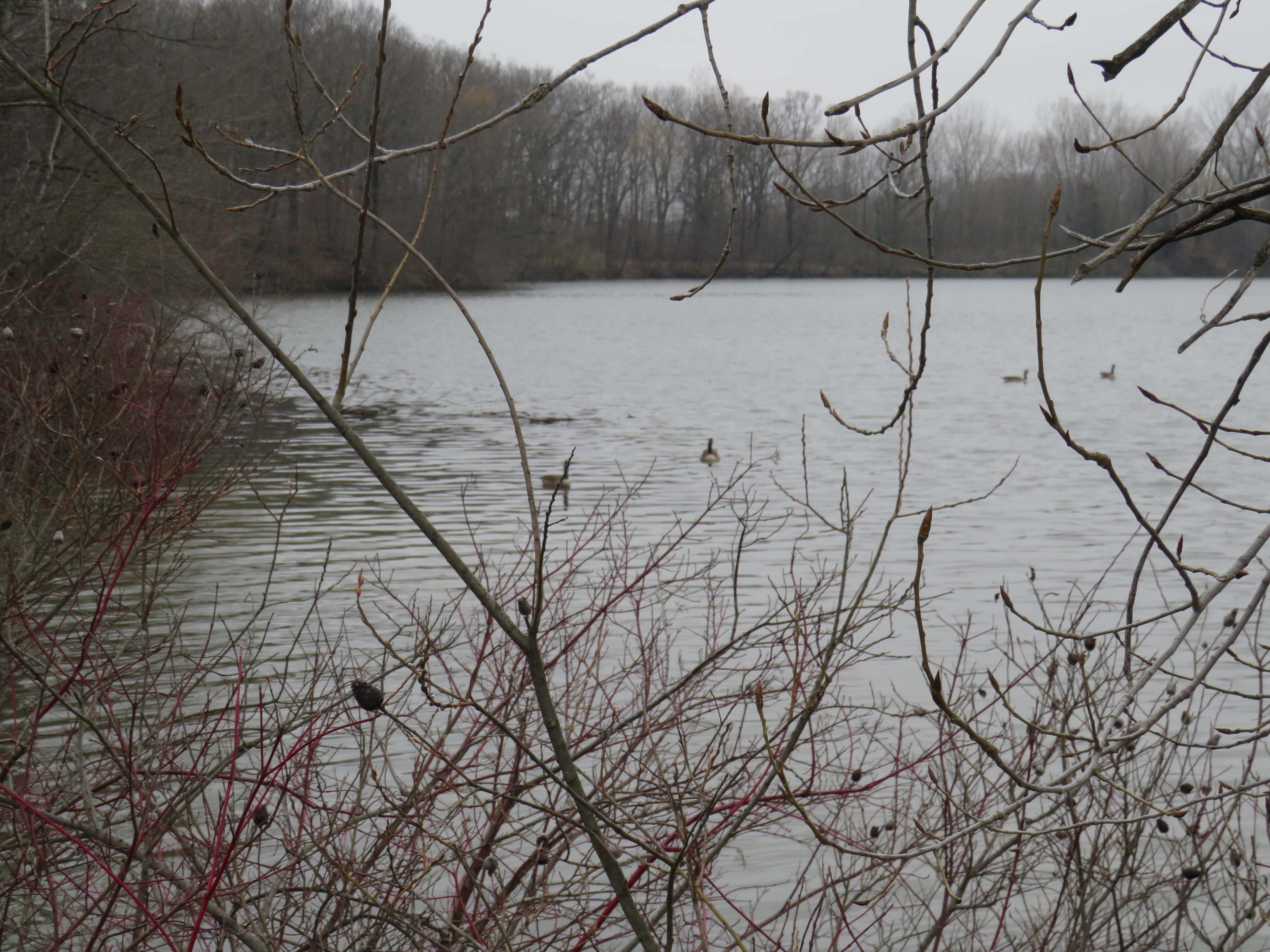
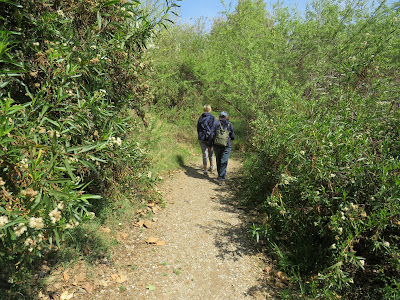
Sunny skies and temperatures in the lower 40’s greet Riley and me as we begin a morning hike on Lumberjack Park’s nature trail. Heading north, we take the boardwalk over a shallow wetland, accompanied by a welcome sign of spring, the familiar call of a Tufted Titmouse. Crossing the foot bridge over Mud Creek, I pause at mid-stream to watch the water flow gently west toward the Pine River while listening to a Robin. Following the trail through tall pines, I approach a large tree that had fallen to block our way. Upon a closer look, I notice meandering grooves in the cambium layer made by Ash Borer larvae that had killed the tree long before it blew down. Next, I come to the muddy shore of the Pine River and pause to watch the water flow gently past while listening to the clear birdsong of a Northern Cardinal. Following the sound to the treetops, I listen again. In most species, only the male sings. Not so for the talented Cardinal. Males and females sing equally well. These songs, an important coordinating behavior in the life of these birds, includes at least 28 different phrases. They sing during courtship and territory formation. In either context, while perched in different places, they countersing. One bird sings a phrase and the other responds, often with a repeat of the first one’s song. After a little while, the first bird changes the song and the other copies the new song. Cardinals’ call and response countersinging can continue for good parts of the day. Up ahead, I spot one of many patches of Common Greenshield Lichen growing on tree bark, being concerned that some display a pinkish hue rather than the normal green color (stock photo). Many lichen species, like this one, are sensitive to air pollution and develop structural changes, including reduced photosynthesis and bleaching. Air pollution can also cause the death of the lichen algae, discoloration and reduced growth of the lichen fungus, or kill a lichen completely. Nearby, I come to a favorite place on the riverbank where I stop to take in the beauty of this riparian landscape, Crossing the Lumberjack Rd. bridge, I make my way along the opposite riverbank where the morning sun glistens off the slow flowing water. Further along, we listen to the water surging downstream. After making our way through the campground, I pause one last time to look upstream at this colorless riverbank except for the colorful branches of a Red Osier Dogwood shrub.  


Nature trail stark

April breezy chill

Few signs of spring

Waiting for senses to fill

Atop a leafless tower

Against a grayish sky

Crested Cardinal sings

Lovely tune draws nigh

Robed in red

Loud and clear

Favorite season

Is finally here


D. DeGraaf

Monday, April 11, 2022

April 11

A gentle breeze, temperatures in the mid 40’s and overcast skies greet us for an afternoon hike in Alma’s Conservation Park. Heading west along a high bank of the Pine River, I can barely see a male Ring-necked duck swimming far off-shore. This duck’s common name refers to the hard-to-see chestnut collar on its black neck. While not a good field mark to use for identification, it was distinctive to nineteenth century biologists that described the species using dead specimens. Strong and fast fliers, these ducks can take flight by springing up directly from the water, without the take-off run of most diving ducks. This one is likely migrating from its winter-feeding grounds along the Gulf of Mexico or southern Atlantic coast to its summer breeding grounds in the upper Peninsula or Canada. Next, I pause to look at and listen to two harbingers of spring, a foraging Robin and a Sand Hill Crane flying overhead. Nearby, along the water’s edge, I come upon the feathers and flesh of an unknown bird, killed and consumed by a predator, perhaps an owl or fox. Turning inland away from the river, I watch a Black-capped Chickadee making a nest in a dead Ash tree trunk. Both males and females participate in cavity “excavation” which lasts 7 to 10 days. After completing about an 8-inch-deep cavity, the female makes a cup-like nest inside where she uses twigs for a strong foundation before lining it with softer materials like rabbit fur. Further ahead, I spot a patch of British Soldier lichens before stopping next to a small pond to hear a single Spring Peeper calling out. It won’t be long before this habitat will resound with a chorus of these tiny amphibians. Turning back toward the car, I listen to the song of an Eastern Phoebe making its presence known. This bird (stock photo) has return to its breeding territory after migrating from its wintering habitat in the southern latitudes of the United States and Mexico. After checking out the kiosk displays at the Eyer Learning Circle, I spot a subtle sign of spring; mottled maroon, hood-like leaves of Skunk Cabbage emerging from a shallow wetland. In a few weeks, these plants will carpet this area with huge, dark green cabbage-like leaves. Skunk Cabbage roots are toxic and the leaves impart a hot, peppery taste. Native Alaskans wrap-up fresh fish in Skunk Cabbage leaves and cook them on a bed of coals. The leaves keep the fish moist and give it a tangy flavor.


On the edge of April

Spring takes hold

Afternoon air

No longer freezing cold

New life emerges

Mother Nature’s pledge

From the forest floor

Green moss and sedge

From the cloudy skies

Falls a gentle rain

From the field afar

Calls a Sandhill Crane


D. DeGraaf

Monday, April 4, 2022

April 4

Under partly sunny skies and temperatures in the mid 60’s, we explore the 500 ft.-high hilltop park, called the Baldwin Hills Scenic Overlook, 10 miles west of downtown Los Angeles. This landmark is one of several dome-shaped hills running northwest to southeast along the coast (stock photo). Soon, I come upon a 1-inch, Desert Stink Beetle as it walks with its head down and then raises its rear end as a defense against my approach, thus its other name, “Headstand Beetle”. This posture happens as it discharges a foul-smelling secretion from the tip of the abdomen toward a would-be attacker. Also seen in skunks, this insect is also known as a Skunk Beetle. However, there is a field mouse predator that has learned to counter such attacks by holding the beetle's butt down to the ground while biting its head off. This beetle may burrow under the sand when intense sunlight overheats the ground and come out at night to look for food such as fungi, animal detritus, and plant matter. After pausing to watch a Red-tailed Hawk soar high above, I come upon a Mourning Dove gathering nesting material. While most birds spend several days, to as much as two weeks building a nest, a mating pair of doves can quickly throw together a loose platform of sticks in just a few hours. Their flimsy nests are made of pine needles, twigs and grass (stock photo). From this scenic overlook, I gaze through the haze at the Los Angeles skyline, 10 miles to the east. With a population of 4 million people, it’s the 2nd largest city in the U.S. Further ahead, I spot lovely blossoms of Geranium and Bush Monkeyflower. The monkeyflower has an unusual adaptation to aid pollination. Before fertilization, the stigma is open, appearing like a white, lobed platter. When brushed by an insect the lobes fold together (stock photo). If pollen has been deposited, the stigma remains closed, securing the pollen, and initiating fertilization and seed development. Otherwise, it opens again. Other blossoms that catch my eye include, Beach Sun-cup and Mule Fat. The common name, mule fat, comes from the gold mining days when prospectors and cowboys would tie their mules to the shrub to browse. Native Americans had many uses for mule fat, including using the leaves as eyewash and to stop baldness. Some California tribes would use the stems as hand fire drill. Nearing the car, I notice a perching California Towhee and Anna’s Hummingbird. 


Was it flowery fields?

Or a craggy coast

Was it azure skies?

I remember most

Was it gullies green?

Or hills I climbed

Was it bird songs?

That stirred my mind

California memories

Loud and clear

Images of nature

I’m holding dear


D. DeGraaf

Monday, March 28, 2022

March 28

With temperatures in the low 60’s, a gentle sea breeze and sunny skies, we climb a paved trail at Deane Dana Friendship Park, a 120-acre, hill-top nature preserve overlooking the city of San Pedro, on the south end of the Palos Verdes Peninsula. Soon, we come upon a field, colored by yellow blossoms of Black Mustard. This tough plant germinates early in winter before native plants have taken hold, shoots up more than 6 feet tall, hogs the sunlight with its thick stalks and lays down a deep system of roots that beats out native plants for water. Coming closer, I hear sounds of West Coast Spring Field Crickets. Glancing down the hill, I notice a large stand of gray mustard stalks from previous years that have dried up and now serve as kindling for a potential wildfire that could occur anytime considering this winter’s severe drought. To make matters worse, these plants lay down thousands of seeds and are one of the first to germinate after a fire. Further up the hill, I notice blossoms of Wild Radish as well as Garland daisy plants, some displaying both yellow and white blossoms. Up ahead, I spot some colorful groundcover consisting of tiny pink blossoms of Stork’s bill and a California Towhee taking a bath. Nearby, I pause to pick a Lavender blossom and enjoy its lovely aroma. Turning around and heading downhill, I see a Rattlepod plant. The name refers to the rounded, inflated seedpod that contains several pea-like seeds. When dry and hard, the seeds rattle around when the pods are shaken. Other common names include Santa Barbara milkvetch and Ocean locoweed. All parts of the plant are toxic if eaten, which explains the common name ‘Locoweed’ as domesticated horses, cows and sheep can become quite ill if they eat too much. Further down the hill, I come upon a noisy Raven and a Ponderosa Pine with its 5-inch needles, textured trunk and colorful, male pollen cones. Even though these cones will soon fill the surrounding air with clouds of powdery pollen gains, they are not a source of inhalant allergies. After viewing a residential area of San Pedro below, I stop to watch a honeybee feeding on a Hairy Rockrose blossom. Just before reaching the car, I look on the ground to see the nickel-size shell of a White Garden Snail. These invasive gastropods can cause severe defoliation of several plants, including vegetables, citrus and ornamentals. 


Away from winter

Away from the din

Wetlands await

Nature awakes

Tones of revival set

Peepers and redwings declare

Dames and ganders gather

Muskrats and mallards move

Herons and cattails stand still

Duckweeds line the shore

With lively shades of green

Spring finds the marsh and me


D. DeGraaf

Monday, March 21, 2022

March 21

The midday sky is sunny with temperatures in the low 60’s and a steady westerly breeze as we hike in the 13-acre, Willow Wetlands Preserve in Gardena, California, 15 miles south of Los Angeles. In the mid-1970s, the City of Gardena planned to fill in this land and build a convention center. However, residents fought to stop destruction of the wetlands and preserve its value as a green oasis, a migratory stop for ducks, a home for resident birds, a haven for reptiles and amphibians and a natural mechanism for cleaning street runoff water before making its way to the Pacific Ocean. Immediately, colorful spring blossoms of Wood-sorrel and Poppy are a welcome sight. Just ahead, I watch a Monarch flutter around before landing on a Coastal Sunflower head. Scanning a pile of fallen branches, I catch a glimpse of a 4-inch, well-camouflaged Western Fence Lizard. These reptiles can “throw” their tail to get away from an enemy. Eventually, the tail will grow back; however, the female is very picky about courtship and won´t even look at a male who has lost its tail. Also, their powerful hind legs allow them to run fast and quickly change directions to escape predators. Other methods of escape include their ability to jump and rapidly climb trees. Following the path next to a busy street, I notice a blossoming cherry tree and a patch of blossoming Nasturtium while from a shallow pool, hidden my dense underbrush, I hear the familiar call of a Mallard. Up ahead, I watch a fast-moving, orange butterfly finally land so I can identify it as a Gulf Fritillary. This is one of several species being mass-reared commercially for release at outdoor events like weddings and garden parties. If done properly, it is a harmless and esthetically pleasing addition to the environment that may even help revive declining populations. Continuing down the trail, I pause to watch several honeybees feeding on blossoms of Black Sage and then spot blossoms of California Lilac. Rich in saponins, these flowers can be crushed and mixed with water to produce an excellent lather which is an effective and gentle soap. They were used by the North American Indians as a body wash, especially by the women in preparation for marriage, since they left their skin smelling fragrantly. Also known as ‘New Jersey tea’ , lilac leaves were used as a tea substitute during the American Revolution. Before leaving the preserve, on this first full day of astronomical spring, I pause to recognize the shining sun that reached its vernal equinox yesterday.


Star of earth

Sun of sky

We celebrate

Your place on high

Star of earth

Path ascends

Your energy

All life depends

Star of earth

Light of days

Glowing orb 

You I praise


D. DeGraaf

Monday, March 14, 2022

March 14


Sunny skies and temperatures in the upper 50’s accompany us on an early morning hike at Palos Verdes Peninsula’s Abalone Cove Reserve, named after the edible, but endangered mollusk with a colorful calcareous shell (stock photo). Abalone once were to California what lobster is to Maine and blue crab to Maryland, so plentiful they were harvested by the thousands (stock photo). Californians held abalone bakes, spun abalone folk tales and sang abalone songs. Abalone were integral to coastal Californian culture, until suddenly they weren’t. In the later part of the 20th century, these once-abundant animals were nearly wiped out by overfishing, disease, and climate change. Of California’s seven abalone species, two are federally listed as endangered and none are currently open to fishing. On a steep descent to beach, we pass yellow blossoms of Wild Mustard as well as a trail sign not likely seen back home. Approaching the shoreline, I get a closeup view of a Rock Wren. Their nest is often marked by "paving" of small stones, sometimes with bones and other debris, laid out on ground in front of the entrance (stock photo). Nearby, I spot a California Ground squirrel. These rodents reside on the ground and in burrow systems. The burrows can house many generations, forming a small colony, while each squirrel has a unique entrance. They use a variety of sounds, tail signals and scent production as means of communication. When threatened, they can belt out a high-pitched alarm call that can last for several minutes. Moving down to the beach. I notice clusters of Mussels sticking to a large rock as well as a Spotted Sandpiper hunting for food. Approaching a pile of washed-up Kelp, I’m not surprised to see tiny flies swarming over it. Upon closer look, I spot one of these tiny 5mm Kelp flies. Adult flies and their larvae play an important role in the beach food web by decomposing piles of Kelp while also being a food source for shorebirds and passerines. Thus, I’m not surprised to see a Song Sparrow foraging on a nearby pile. Moving down the beach, I first look down at Seagull tracks in the sand and then look skyward as a pair of Brown Pelicans fly by. Nearby, uplifted layers of sedimentary rock catch my eye. Heading back up the steep slope, I pass by blossoms of Coastal Bush Lupine and pause to look out at Catalina Island, 20 miles to the west. Nearing the car, my last observation includes pink blossoms of a Wishbone bush.


Winter winds

Prevailing east

Nature surrounds

Greatest to least

Steep cliffs

Rocky beaches

Pelican dives

Whale breaches

Falcon soars

Higher than most

Pounding surf

Carves the coast


D. DeGraaf

Monday, March 7, 2022

March 7

The morning sky is sunny with temperatures in the low 60’s as our daughter, Allison joins us for a hike on Fern Dell nature trail in Los Angeles’ Griffith Park. Covering more than 4,000 acres of natural terrain, this is the largest municipal park and urban wilderness area in the United States. We begin by following an earthen path along the edge of a narrow stream shaded by huge Sycamores, Live Oaks and Redwoods. Lush vegetation line the stream bed including, 2-ft long leaves of Elephant Ear and Philodendron. Up the trail, I pause to watch Koi fish swimming in a shallow pond. These fish are an ornamental species that descended from the carp family. In the 1600’s, Chinese farmed carp in rice paddies, a practice that traveled to Japan where the Japanese noticed color variations and bred them, creating the Koi species. Japanese bred them for perfection, prized them in collections of royal families and immortalized them in royal artworks. Chinese farmers originally bred Koi for eating, however, later they were bred as pets for their unique and striking colors and not for consumption. It wasn’t until the 1900’s that Koi were bred in the United States. Moving along, since the trail name includes the word “fern”, it’s not surprising to spot some, including, Button, Lady and Sword. Nearby, colorful blossoms of Fuchsia and Elephant Ear catch my eye while high up a snag, I get a quick glimpse of an Acorn Woodpecker. These birds are best known for their habit of hoarding acorns: they drill small holes in a dead snag, then harvest acorns in fall and store them in these holes, to be eaten during winter. Such a "granary tree" (stock photo) may be used for generations and may be riddled with up to 50,000 holes. Nesting is a group activity, with several adults (up to 12 or more) taking part in incubating the eggs and feeding the young in a single nest. They also spend considerable time catching insects on the wing. Turning around, I pass a stand of Bamboo stalks and a Fox Squirrel digging for nuts. Near the car, I stop to notice the colorful blossoms of a “yesterday-today-and-tomorrow” plant. Its long name fits for more than one reason. The flowers change their color from one day to the next, starting out purple, then turning lavender and finally becoming white as they mature. Plus, this tropical evergreen shrub is a long, persistent bloomer. After the first, heavy bloom in the spring, it will produce more of its showy, fragrant flowers in the fall, or anytime during the year.


Waning winter

Wandering west

Treading trails

No time to rest

Waterfalls

Mountain crest

Verdant valley

Osprey’s nest

Still my cause

Still my quest

Exploring nature

Her most and best


D. DeGraaf