Monday, June 24, 2019

June 24


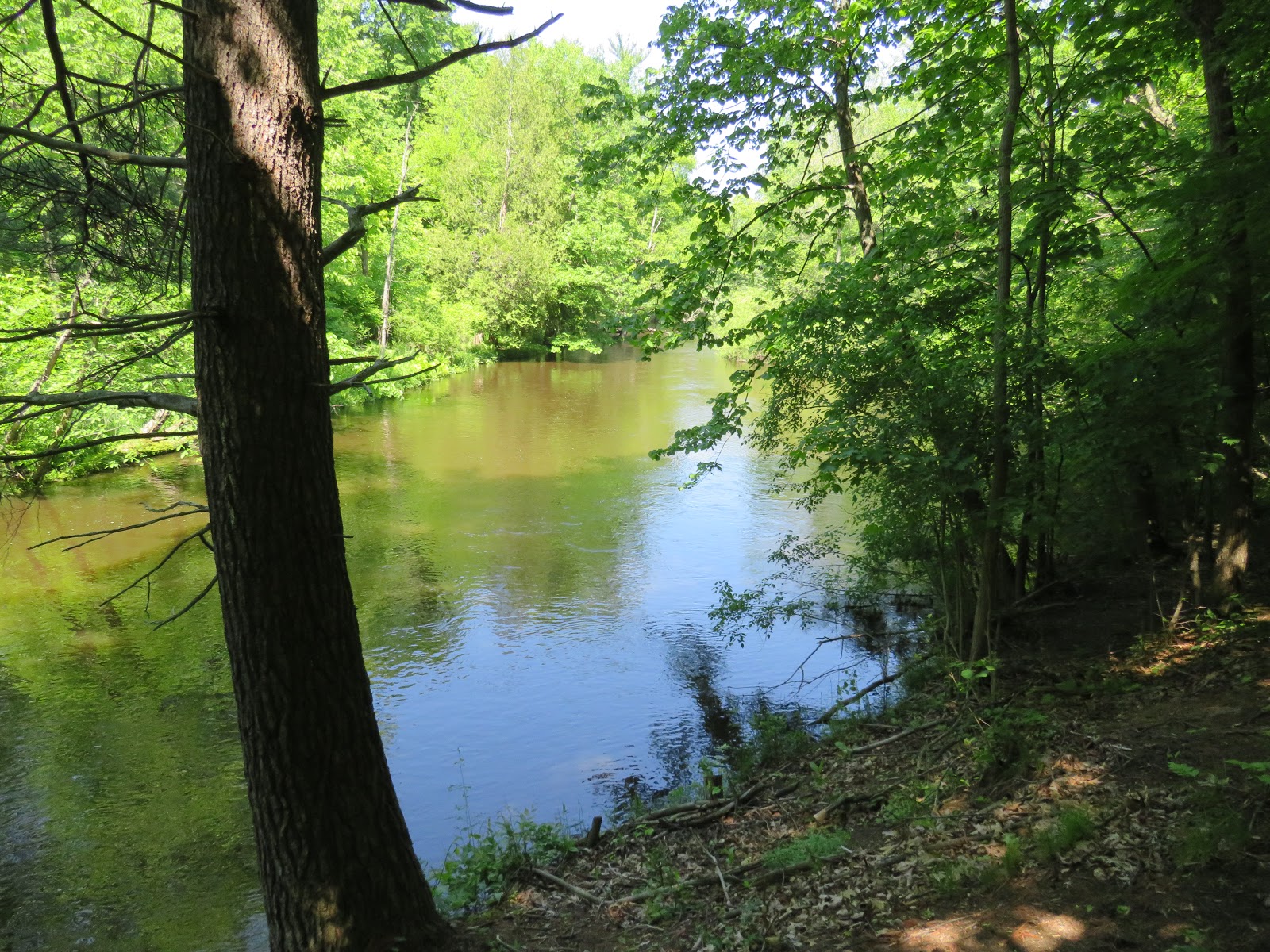
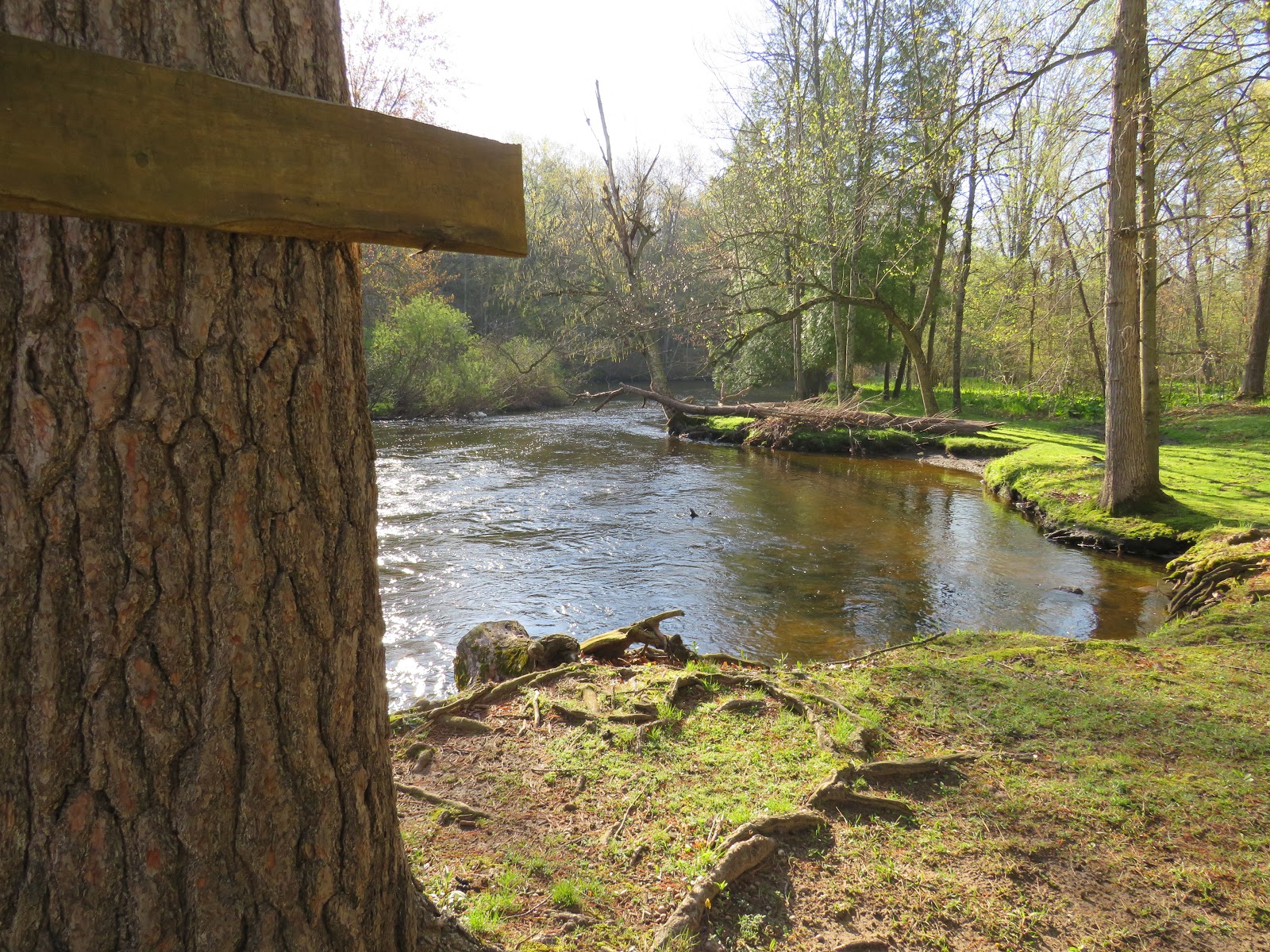
On this cool, cloudy morning in Chipp-A-Waters Park, I’m excited to reunite again with the Chippewa River as it begins it journey through the city of Mt. Pleasant. While observing the gently flowing water, my attention draws to a female Snapping Turtle (16 inch shell) digging into the riverbank in preparation for laying her eggs. Once a shallow bowl-shaped nest is dug, she will deposit 20-40 creamy white, ping-pong ball-sized eggs (stock photo), guiding them into the nest with her hind feet and covering them with dirt for protection. Incubation time ranges from 9-18 weeks after which the defenseless hatchlings must fend for themselves (stock photo). Since the eggs and hatchlings are easy prey, only a few offspring survive. Following a paved path next to the river, I spot a variety of yellow blossoms including: Mustard, Wintercress, Yellow Sweet Clover, Birdsfoot Trefoil and Hop Clover as well as white blossoms of Bladder Campion, Multiflora Rose and Oxeye Daisy. On the path ahead, I notice a Cowbird while across the river, an Eastern Kingbird catches my eye. The surface of a small pond beside the trail appears to be ice-covered but in fact is blanketed with fuzzy-white seed fibers that fell from surrounding Cottonwood trees. Approaching the Brandell Bridge, I come upon another Snapping Turtle mother preparing her nest. Pausing on the bridge, I first gaze far upstream through a corridor of lush vegetation and then downstream as the river meanders eastward through the park. Turning around and retracing my steps along the bank, I notice Reed Canary Grasses are blooming and from the canopy above, the squeaky song of an American Redstart (stock photo). Approaching my starting point, I spot a Song Sparrow on a twig and a Brown Damselfly on a piece of dead epidermal tissue, before bidding farewell to the river until next time.

Constant current
Steady stream
Cool waters
Morning steam
Soothing sounds
Along the way
Music of nature
Night and day
Chippewa River
Getting to know
Onward you journey
Forward you flow

D. DeGraaf

Monday, June 17, 2019

June 17


The late morning sun shines through the dense canopy of Sugar Maple trees as I begin my hike at the south trailhead of Lumberjack Park Nature Trail. The newly fallen green maple leaves littering the trail is a sign that tiny 1/3-inch larvae of the Maple petiole borer (stock photo) are actively feeding. Rarely seen adults are ¼ inch non-stinging wasps called sawflies (stock photo). Fortunately, this premature leaf drop is short term and does not kill the trees. Continuing north on the boardwalk, I’m greeted by several fluttering Ebony Jewelwing Damselflies. Emerging from eggs laid in surrounding water, these insects spend about a year in the submerged naiad stage (stock photo) before molting into winged adults that live about 2 weeks. Up ahead, my attention is drawn to colorful blossoms of Wild Iris peaking through the marshy vegetation. Turning east, I come to the newly repaired bridge over Mud Creek where I spot blossoms of Daisy Fleabane and wild Raspberry growing along the banks. Downstream, seeds from towering Cottonwood trees fall like snow on the flowing water. Making my way west onto the White Pine trail, I pause to look and listen to the commotion of Fox Squirrels chasing each other through the dense canopy. Nearby, a Black Squirrel (Melanistic Gray) stares me down while clinging to a tree trunk. Before reaching the north trailhead, I veer sharply to the left and follow the Riverview Trail to one of my favorite vistas where I rest to enjoy the sights and sounds of the gently flowing Pine River. Looping back to the north through a stand of mature White and Red Pines, I stop to notice a Little Wood-Satyr Butterfly resting on a leaf. Retracing my steps back toward the car, I listen to a chirping Chipmunk perched on the forest floor. Back at the car, I reflect on the good condition of the trail and the work that is being done on a new section that should open next summer.

Signs of spring abound
Mother Nature thrives
Frog sits and watches
Duck swims and dives
Nests fill with chicks
Forest fills with green
Warbler on a branch
Heard but seldom seen
Seasons are changing 
Summer arriving soon
May, a distant memory
Such are days of June

D. DeGraaf

Monday, June 10, 2019

June 10


Here I am hiking in Meridian Park, seeking another encounter with the Chippewa River as we both continue our 90-mile journey through the fields and forests of Mid-Michigan. Since I last saw this waterway leave Deerfield Nature Park, it has traveled about 2 miles southeast to this location. It’s a cool, cloudy morning as I navigate a narrow trail in this scenic riparian landscape west of Mt. Pleasant. Along the way, I spot a scattering of Birdsfoot Trefoil blossoms as well as a Field Sparrow, perched in the undergrowth. From a high bank, I watch as the meandering river flows slowly around the bend and notice how the outer edge of the channel, where the current is strongest, has cut into the slope. On the gravely ground, I see milkweed beginning to grow as well as evidence of Spittle Bugs attached to nearby vegetation (stock photo). Further ahead, I pause in the quietude as the river flows gently to the east while on the far shore, a wading Whitetail catches my eye. Continuing through a narrow corridor of lush undergrowth, I am pleased to eye a calling Rufous-sided Towhee. Next, I come to into a wooded area of mixed conifers where the trail is carpeted with dead White Pine needles. Far ahead, I see and hear a chirping Chipmunk singing a duet with a Mourning Dove. Turning around and retracing my steps, I re-enter a dense forest of broadleaf trees where the damp ground displays blossoms of False Solomon Seals and Canada Mayflower. Down the trail, I come across a few blossoms of Wild Columbine. Back in a clearing, I gaze across the river to the south at a stand of dead Ash trees that reminds me how the Ash Borer disease has changed the forest ecosystem in Mid Michigan and beyond. Back to the car, I pause in gratitude for another opportunity to explore this unique natural resource.

Chippewa waters
Come and go
Fluid of life
Ever to flow
Chippewa waters 
Sight and sound
Feed the fish
Nourish the ground
Chippewa waters 
Earthly span
Gift of nature
Treasure of man

D. DeGraaf

Monday, June 3, 2019

June 3


After ducking down to clear the Winn Rd. bridge, Caroline and I steer our canoe downstream on the Chippewa River as the channel meanders north through Deerfield Nature Park. On the far shore, a large Map Turtle moseys along while several trees with white blossoms can be seen on the bank. Upon closer look, I see they are a variety of Viburnum. After being serenaded by a Robin, we exit the canoe near the Lewis Pontiac bridge where I pause to look and listen as the river continues eastward through the park. Measurements taken today at Mt. Pleasant indicate the river is flowing at a rate of approximately 600 cfs (cubic feet per second). Depending on the time of year, the river is known to flow between a low of 19cfs and a high of 6,210cfs during peak runoff periods or flooding. The average flow for the river hovers around 394cfs. Following a trail east into a dense wooded area, I welcome the sight of this season’s broadleaves including: elm, oak and basswood. Also, the colorful male cones of Ponderosa Pine catch my eye. From the lush canopy, several warblers sing loud and clear. Unable to see them, they sound somewhat like Black & White (stock photo). Continuing east, I come to the suspension bridge. Crossing the swinging bridge, I turned west and come to a clearing where I spot blossoms of Goat’s Beard and Hawkweed. Heading back toward the Lewis Pontiac Bridge, I notice blossoms of Autumn Olive and Maple Leaf Viburnum. Back on the bridge, I pause once again to take in this week’s sights and sounds of the river and the warbler. Since my last encounter at Audubon Woods, the Chippewa has flowed about a mile northeast to this point on its journey to Midland.

Summer approaches
June has begun
Nature’s conveyor
Run river, run
Ripples and rapids
Shimmering sun
Verdant banks
Run river, run
Stream of life
Never is done
Gentle or strong
Run river, run

D. DeGraaf

Monday, May 27, 2019

May 27


After an early morning thundershower, the temperature is mild and sky is clear as I hike an earthen trail in Audubon Woods Preserve. I’m on my way to another encounter with the Chippewa River as part of my goal to explore this riparian corridor from its source in Barryton to its mouth in Midland. Descending a gradual slope through a lush broadleaf forest of Beech and Maple, I come across a 4-inch, wax-cap mushroom being fed on by some tiny flies as well as a 2-inch, Orange Peel fungus. Along the way, I spot some Trillium and Yellow Violets among the leaf litter. Nearby, the cut end of a decaying tree trunk totally covered with Turkey Tail fungi is a fascinating sight to behold. Reaching a high bank, I take a moment to greet the river, once again. Since my last encounter at Sylvan Solace, it has flowed due south about 3 miles to this point. Climbing down to the flood plain, I notice Marsh Marigold flowers and a rarely seen, tiny Wild Ginger blossom, hidden under the leaf. Exploring the mud flats, a variety of ferns catch my eye including: Maiden Hair, Sensitive, Lady and Cinnamon. On a fallen log in a small vernal pond, I spot a 3-inch Green Frog. In the nearly closed canopy above, I listen to an Eastern Phoebe (stock photo). Before heading back, I pause once more to watch the river, as it turns northeasterly toward the city of Mt. Pleasant. Ascending the slope back toward the car, I pass a decaying conifer log displaying a reddish color due to resin and tannin contained in the heartwood. Also, I see a few Wood Anemone blossoms. Continuing back through the quiet forest, I enjoy the song of an Ovenbird (stock photo). Completing the hike and heading home, I reflect on another memorable river rendezvous.

I welcome your waters
Your journey is long
River, my muse
Take me along
Burgeoning banks
Your current is strong
River of life
Take me along
Learning your secrets
I hear your song
River of nature
Take me along

D. DeGraaf

Monday, May 20, 2019

May 20


The early morning weather is clear and cold as I hike through a section of Lumberjack Park that is to become an extension of the current nature trail. From the south trailhead, I hike west on Madison Rd. over the Pine River, turn right and make my way through a dense wooded area where I’m amazed to see the ground bursting with hundreds of white Trillium flowers. In all my nature walks around here, I’ve never seen so many of them in one area. What’s even more amazing is the many deer that live in these woods haven’t eaten them. While beautiful to look at, they are extremely fragile and picking them effectively kills them, ensuring none will grow in their place. Pink blossoms of Spring Beauty, although not completely open, also blanket the forest floor. Smaller patches of Phlox, Yellow Bellwort, Violet and Wild Geranium are evident as well. All of these wildflowers, called spring ephemerals, occupy a short, yet glorious interval in the park, blooming and setting seed during a small window of sunlight between snowmelt and when the trees leaf-out. While heading northwest through the campground, I pause to look and listen to a Baltimore Oriole perched high in a tall tree. Next, I veer off the trail to the river’s edge where I observe the gently flowing water reflecting the surrounding landscape. On the muddy shoreline, I notice opossum and duck tracks as well as weasel and deer. Just ahead, I spot a May apple plant displaying a tiny green flower bud and a few fern fiddleheads that are tender and tasty this time of year. On a nearby log, I spot some “hairy” Coyote scat as well. Leaving the woods, I pause once again as the babbling river flows over some rocks. Continuing past some pavilions to Lumberjack Rd, I cross the bridge to the north trailhead of the current nature trail. After doing some grooming and adding a few signs to this area of the park, we hope to have the “Campground Trail” open to the public by next summer.

Floor is barren brown
Nature’s ways to keep
Green shoot reveals
Midst of forest deep
Stalk soon appears
From muddy ground
Three leaves sprout
Single bud so round
Three pedals white
Unveiling you bring
Dainty Trillium flower
Speaks to me of spring

D. DeGraaf

Monday, May 13, 2019

May 13


On a cool, cloudy, early morning, I’m hiking an earthen trail in Sylvan Solace Preserve, anticipating another encounter with the Chippewa River. From the last time I saw the river, it flowed from the spillway on the east side of Lake Isabella and meandered southeast about 4 miles to this access location. From the parking lot, I walk north on the Meadow Lane trail where I spot a couple of Chipping Sparrows on the path ahead. Turning west on the River Loop trail, I proceed into a forest of hardwoods where the leaf litter reveals another sign of the season, the green foliage of a patch of May apple. Reaching the river, I descend the steep bank and pause to take in the scenic riparian landscape as the swollen watercourse flows rapidly southward. On the shore nearby, I observe nature’s version of a green salad, skunk cabbage along with some baby horsetails and ferns. Back up the slope, I follow the trail south along a bluff where I spot a few blossoms from a Service Berry tree as well as a silk nest in the crotch of a young cherry tree containing some 1 cm.-long Tent Caterpillars. Far ahead on the trail, a sudden movement draws my attention to a well-camouflaged Whitetail doe. Continuing on the River Loop trail, I head northeast where, above me the forest canopy is beginning to close up and at my feet Pennsylvania Sedge and Wild Strawberry are beginning to flower. Heading back toward the car on the Meadow Lane trail, I notice a white substance on a pine tree trunk where the watery sap has condensed to reveal the sugars and other minerals contain in it. Also, no hike at this preserve would be complete without stopping to watch the comings and goings of one of many mound ant colonies. Finally, what seemed like an appropriate conclusion to my hike was a serenading Chipping Sparrow.

Welcomed scene
Glad to know
Sustaining life
Flow, river flow
Fish and fowl
Fawn and doe
Living water
Flow, river flow
Farwell for now
Onward you go
Until next time
Flow, river flow

D. DeGraaf