Monday, November 28, 2022

November 28

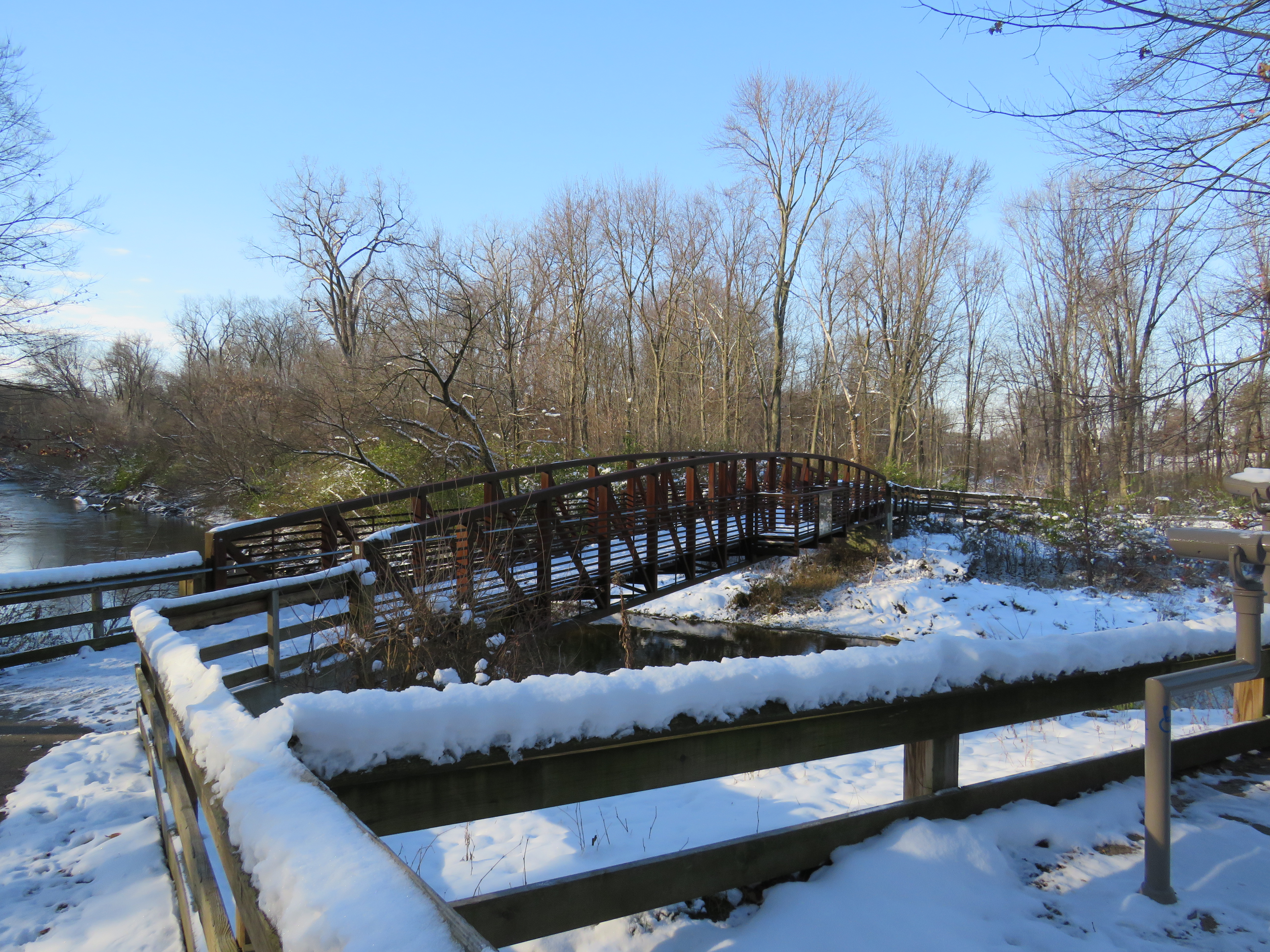
I’m at Mt Pleasant’s Chipp-a-Waters Park on a mostly sunny morning with temperatures in the lower 30’s and a westerly breeze, watching the clear, cold water of the Chippewa River flow gently east through a snowy landscape. Up ahead, I watch a family of geese move with the current downstream. Following a paved pathway along the river’s edge, I spot a Cocklebur plant with its prickly seedheads and a Prickly rose plant with its large, bright-red, pear-like hips. Since these hips are fleshy and edible, I pick one and enjoyed its sweet flavor. While they are consumed by humans for jelly and tea, birds love them as well. On the other side of the trail on the snow-covered ground, I notice tracks of a Field mouse and a briefly resting Dark-eyed Junco.  Juncos, like many other birds, migrate “South” for the winter months; however, lower Michigan is their south. These birds live in Canada for the rest of the year and come down here only in the winter where they can be seen around backyard bird feeders eating assorted grass, thistle, and sunflower seeds. When they are not at feeders, they can be found near farm fields foraging for grains on the ground that were not harvested. Scanning the understory, I’m not surprised to see dead leaves of American Beech and White Oak still attached to branches. However, I am surprised to see a solitary Maple tree with leaves still attached (a possible hybrid). Tree foliage that is still green include Buckthorn with its dark blue fruit and Winterberry with its bright red fruit. Crossing the Brandell bridge over the Chippewa River, I gaze west to take in the scenic riparian landscape. Circling the paved path around Viet’s Woods, I spot a female Hairy Woodpecker (males have a red patch on the back of the head) feeding on a snag and a perching male Goldfinch. Beginning in September, and continuing for six to eight weeks, these birds molt all their feathers, ending up with a completely new, drab-colored set as they head into the winter. In the spring, they grow new feathers that are a bright yellow breeding plumage (stock photo). Most Goldfinches observed around here do not migrate. To stay warm on a cold winter's night, these birds have been known to burrow under the snow to form a cozy sleeping cavity. They will also roost together in coniferous trees. Other sightings include Whitetail deer tracks and Fox Squirrel tracks. Back across the bridge heading toward the car, I notice a stand of leafless Black Locust trees with 4-inch seed pods hanging from their branches.


Hunter or hunted

Man or deer

Who’s the killer

Answer is clear

Heated blind

Comfortable wait

High-powered gun

Pile of bait

Shots ring out

Bullets stray

Whitetail runs

No death today


D. DeGraaf

Monday, November 21, 2022

November 21

Before starting a hike at Alma’s Conservation Park, I’m checking out my newly-started butterfly garden next to the bathroom building. Under overcast skies and temperatures in the lower 30’s, I head south when a gust of wind shakes the dead oak leaves still clinging to the tree above me. Further along, I pass through a grove of Red Pine trees where their slightly reddish trunks are noticeable and the leaf litter reveals lots of their dead needles. Moving west under the powerlines through the native grassland, I notice a few blue berries remain on some dead Pokeweed plants. As the trail veers north, I come upon a vine of the invasive, Oriental Bittersweet with its colorful red berries, some of which still display their orange seed capsules. This Asian native was imported in the 1860’s as an ornamental landscape plant but has long since escaped into the wild. The vines grow vigorously and tend to suffocate native plants from growing by preventing exposure to sunlight and other resources in the landscape. It’s not surprising that florists like to add these vines to wreaths and other autumn decorations. While the berries are toxic to humans and pets, they are a winter food source for birds like Robins, Grouse and Starlings. Birds are a key part of the plant’s success story sine the seeds inside the fruit usually pass safely through the birds’ digestive tracts and quickly get spread. Up ahead, I come upon another invasive, Asian import- a thorny shrub with bright red berries, called Japanese Barberry. This plant was introduced to the United States as an ornamental in the 1870’s. As a hardy, exotic species, it since has spread to open woods, roadsides, and natural areas. The berries are eaten by birds and small mammals who widely disperse the seeds. Humans can eat the berries as well. Eaten raw, they taste a lot like very tart cranberries. In the Middle East, the fruit is usually dried for preservation so it can be used year-round in all manner of dishes. At my feet, I notice the leaf litter includes oak, maple and cottonwood. Up ahead, I stop by the Eyer Learning Circle and Bird Observation Hut before heading west through tall pines as snowflakes begin to fall. Turning north, I come to a high bank of the Pine River where I scan the austere millpond, occupied by some swimming waterfowl. Upon closer observation, I see several male and female Mallards. As snow continues to fall, I follow the riverbank eastward through one of the overlooks where the leaf litter reveals big-tooth Aspen. Finally, I glance one more time at the whiting landscape before reaching the car.


Far away from the hunter’s gun

Run, river run

By light of the moon, light of the sun

Run, river run

Your journey’s not over, only half done

Run, river run

Keeping you clean is priority one

Run, river run

Ice flows have not yet begun

Run, river run

Walking beside you is lots of fun

Pine River run


D. DeGraaf

Monday, November 14, 2022

November 14

About 2 months ago, I started my quest to explore the 14-mile, Pine Creek channel from its end, where it empties into the Maple River, to its beginning. Following the creek north, I first watched it spill over the Rainbow Lake dam. Further upstream, I saw it flow under the Luce Rd bridge and the sturdy railroad trestle near Perrington. Working my way upstream, I remember seeing the narrowing creek flow under the Grant Rd bridge and Hayes Rd bridge. Approaching its source, I observed its water flowing under the Johnson Rd bridge and Pierce Rd bridge where it became increasingly vulnerable to polluted agricultural runoff. Other memories include a soaring and wading Great Blue Heron.  So, for my 10th and final encounter with Pine Creek, I’m standing on the St Charles Rd bridge watching its water trickle south. Under partly sunny skies and temperatures in the mid 40’s, I explore the banks where a steady east wind blows some dying stalks of Goldenrod and Milkweed. On the cropland nearby, I spot some dried-up, papery husks of Ground Cherry. During the summer, this 3-ft vining plant produces cherry-size fruit wrapped in a thin, lantern-like husk (stock photo). Leaves and stems are highly toxic while unripe berries can cause upset stomach, vomiting and diarrhea. The ripe orangish yellow berries (stock photo) are a food source for turkey, opossums, skunks and humans. The berries taste slightly sweet and tropical, with a texture that's somewhere between a tomato and a grape. Ground cherries also make wonderful pies and preserves and can be used in any recipe that calls for tomatoes. Crossing the road, I come to the actual source of the creek which is nothing more than a small pool of water, fed by two county drains, that flows gently south through a huge culvert-a humble beginning indeed. While bidding farewell to this watercourse, suddenly, a muskrat swims by me. Ten years ago, the North American muskrat market was booming, thanks to soaring purchases by Chinese and other newly rich nations that desired muskrat fur to line coats and footwear. An auction in North Bay, Ontario featured 55,000 muskrat pelts that were all purchased by China. This high demand was good for Michigan trappers who had no limits on how many they could harvest. A pelt was going for $10-12 —five times what muskrats fetched in the 1990’s. Since then the market has softened. Currently, a pelt goes for $3-4 conservatively, with averages around $5.


Predator of night

Dark becomes day

Your hunt was hard

Your hunger obey

Picked up a scent

Options to weigh

The kill was quick

Devoured your prey

Found your den

Ended your quest

Coyote of the wild

Your time to rest


D. DeGraaf

Monday, November 7, 2022

November 7

Under sunny skies with temperatures in the upper 40’s, I’m standing on the Pierce Rd. bridge, watching a muskrat swim south along a narrow channel of Pine Creek that looks a lot like the hundreds of drainage ditches seen throughout Gratiot County. Classified as omnivores, muskrats mainly consume roots, stems, leaves, and fruits of aquatic vegetation. Once these are depleted, they will eat insects, fish and amphibians. These mammals remain active during the winter, foraging for food, since they do not store any in their lodges. In addition, they are among a few animals that regularly defecate in water where their droppings often contain a protozoan parasite that can cause a flu-like infection that old-time trappers referred to as “beaver fever.” Moving down to the water’s edge, I spot some raccoon tracks in the mud as well as one of their food sources. Moving south along the bank, I’m alarmed to see nearby cropland covered with fresh manure, allowing animal waste easy access to the creek. Further along, I spot a Muskrat resting on the far shore. Michigan’s culinary connection to muskrats began in the 1780’s, when French Catholics from Detroit settled in Monroe County. Historical records describe many residents consuming meat from a variety of sources, including abundant muskrats living along the riverbanks. However, since Lenten rules prohibited the eating of meat, Fr. Gabriel Richard, granted a special dispensation to the region’s Catholics allowing them to consume muskrat. Thus, muskrat dinners became a common occurrence both in the Downriver area and Monroe County (stock photo). St. Charles church in Newport has the longest running muskrat dinner in the region, which has taken place for the past 53 years on the Friday before Super Bowl Sunday. Returning to the car, I drive north and park next to the Filmore Rd. bridge to watch the Pine Creek flow south along the edge of the massive Vanderploeg Holstein farm where 3000 cows, crowded into pens, are milked daily. Given the amount of animal waste produced there, I’m wondering how much of it makes its way into the creek. Exploring the banks, I notice several patches of large green leaves. These are the basal leaves of Burdock that grow during the first year of this biennial plant’s life cycle. In the second year, these plants put out tall, erect stems that display pink to purplish flowers at the top of a spiny ball of hooked bracts, or burs that eventually dry out and turn brown.


Gone from the fields

The luster of gold

Sunshine of summer

Has now turned cold

Gone are Redwings

That ruled the marsh

Winds of November

Blow wild and harsh

Gone is the green

Of leaves and vines

Tales of nature

Mid-autumn signs


D. DeGraaf

Tuesday, November 1, 2022

October 31

With morning temperatures in the lower 60’s under mostly sunny skies and a southerly breeze, I look south from the Johnson Rd. bridge at an unusually straight section of the Pine Creek channel, most likely reshaped by humans to facilitate drainage of farmland. Likewise, the lack of a natural vegetation buffer along the banks, means runoff from this farmland (likely containing herbicide and pesticide residue) washes directly into the creek. Moving down from the bridge, I spot seeds of Milkweed and Clematis (Old Man’s Beard) as well as the red berries of Bittersweet Nightshade. Although not as toxic as Deadly Nightshade (stock photo), these berries are somewhat poisonous and have caused loss of livestock, pet poisoning and, more rarely, sickness and death in children. While exploring the creek, north of the bridge, I pause to watch its water flow gently past, carrying and depositing Cottonwood leaves. After driving north to the Buchannan Rd. bridge, I work my way along a high bank and come upon a patch of recently disturbed dirt called a “buck scrape.” In most cases a buck begins the scraping process by rubbing his forehead and spreading is scent on an overhanging branch and in some cases licking and chewing it.  Once done, he will paw the leaves and other debris from the ground under the branch, then urinate on it, leaving liberal amounts of scent behind to signal his dominance over other bucks. Moving down the bank, I notice a small tree trunk with scrape marks called a “buck rub. These abrasions are caused by a buck rubbing his forehead and antlers against it to remove the velvet from newly grown antlers. Likewise, this effort leaves a scent that communicates a challenge to other bucks while also attracting potential mates. Glancing skyward, I see and hear a perching male Redwing Blackbird-a sight and sound expected in early spring when he claims his breeding territory. However, most likely, this bird is part of a larger feeding flock that is migrating south from his summer breeding grounds in northern Michigan or Canada to winter grounds in southern US or Mexico. Looking across the creek, I can barely make out a clump of dead grass mixed with the fur and bones of an unknown mammal, clinging to a woody snag. Working my way back to the car, I can’t help but notice another one of many suspicious drainpipes sticking out of the bank. Near the car, I’m reminded of the season while observing leaves fall gently as the morning sun shines through a dense stand of deciduous trees. 


Autumn breathes a sigh

October breathes its last

Green has gone in hiding

Colors fading fast

Swallows long gone

Blue Jays stayed

Gone the flowered fields

Gone the forest shade

No more warming sun

Or calls of the wild

No more long days

Or breezes mild


D. DeGraaf

Sunday, October 23, 2022

October 24


For my 7th encounter with Pine Creek, I start by observing its water flowing slowly south under the Hayes Rd. bridge. Under sunny skies, with noontime temperatures in the upper 50’s and a stiff southwest breeze, I make my way off the road toward the creek bank where I’m surprised to see a half dozen Cloudless Sulfur Butterflies fluttering about and landing on the grassy ground. These butterflies exhibit migration and overwintering behavior like monarchs, but they do not travel as far or in as great of numbers. Soon they will leave their breeding sites here and travel south to Florida and other southern states. There, they stay until the end of winter when they again return here to the same breeding sites. One of the greatest threats to these and other migrating butterflies is the destruction and loss of habitat. The caterpillars (stock photo) are often considered elusive pests, because they turn green when eating green leaves and turn yellow when eating yellow flowers. From the bank, I watch yellow blossoms of Black Mustard sway in the breeze. While this plant mostly blossoms in spring, some do blossom now. Moving my way along the bank next to cropland, I spot the never-before-seen, cattail-like seedhead of a grain called Pearl Millet which is used by farmers for poultry, cattle and swine feed. Back near the road, I come upon a well-decomposed roadkill of some unknown mammal, about the size of a Raccoon, Opossum or Woodchuck. While moving the carcass, I notice part of the hairless, scaly remains of an Opossum’s tail. An average adult has a long tail used as an adaptive tool when grasping something (prehensile). This amazing marsupial uses its tail as a fifth limb when climbing on different surfaces. Many people are not aware that they produce a scent at the base of their tail. When a scent is created, it can be easily identified by other Opossums to identify territorial boundaries. In some cases, an Opossum may wag its tail to signal other others that there is danger lurking around, like predators such as large dogs, coyotes and raccoons. Moving my way upstream next to Ennis Rd, I pause to watch a wading Great Blue Heron searching for aquatic prey such as small fish, frogs and snakes. These large, graceful birds will soon migrate south for the winter, some going to the Caribbean, Central America, or northern South America. They travel by day or night, alone or in flocks. Finally, along the bank, I once again spot a drainpipe. Since it drains from a nearby cattle feedlot, it’s pretty good evidence that animal waste is making its way into the creek. 


Showy leaf

Autumn day

Won’t last

Won’t stay

Red to yellow

Fades to gray

Brown to black

Moldy decay

Disintegrates

Without delay

Joins the soil

Nature’s way


D. DeGraaf

Monday, October 17, 2022

October 17

The noontime temperatures are in the mid 50’s, under sunny skies as I stand on the Grant Rd. bridge watching Pine Creek water flow slowly toward its confluence with the Maple River, some 7 miles to the south. Exploring the bank below, I come upon a 16-inch, well-decomposed carcass of a Common Carp. This species was introduced to North America as a sport and food fish during the middle of the 19th century. In the US, carp was farmed by private interests as well as by state and federal fish-and-game authorities. The fish spread quickly and by the 20th century it became an invasive nuisance species competing with native species for food and living space. Also, it uprooted aquatic vegetation, which increased the cloudiness (turbidity) of rivers and lakes. Nearby, I spot a ½-inch Boxelder Bug resting on an Aspen leaf. At this time of year these insects become gregarious and congregate on the south side of rocks, trees and buildings where the sun hits. After large masses gather, they migrate to nearby buildings or homes to overwinter. In the spring they emerge from hibernation when the Boxelder tree buds open. They first feed on fallen boxelder seeds and later move to the female boxelder trees or maple trees where they eat newly developing leaves. Boxelder bugs are not known to bite, but their piercing-sucking mouthparts can occasionally puncture skin, causing a slight irritation and producing a red spot like a mosquito bite. Also, near the ground, I come upon a ¼-inch Winter Cranefly fluttering about. Up ahead, I watch a ¼ inch winged Carpenter Ant crawl rapidly up a dead tree trunk as it passes several pea-size holes made by Carpenter Bees (stock photo). On my way back to the car, I almost step on a 1-inch Garden Slug moving slowly over the ground. Near the car, I spot a Wild Cucumber fruit. While related to the familiar, domestic vegetable, the prickly “cucumbers” is not edible. Instead of fleshy tissue under the skin, it has two seed chambers containing lacy netting. The netting holds four large seeds (stock photo) in place until the fruit ripens and the seeds drop to the ground to begin a new vine. Californian Indians of old would mash the root of this plant and add it to river water to stun fish which would float to the surface for easy retrieval. Next, I drive a short distance to the Luce Rd bridge where I stop and observe the creek as it flows westward. Finally, I pause to look at a stand of trees filled with hundreds of chirping Starlings while others perch on a nearby electrical transmission tower.


Summer leaves

Captured the sun

Green and lush

Everyone

Fall foliage

October days

Yellows and reds

Browns and grays

No matter the pigment

No matter the shade

Forest has no favorites

Every color displayed


D. DeGraaf